
What defines your lifestyle? For most people, lifestyle expenses encompass housing costs, transportation, family needs, and leisure activities. Cell phones, spa treatments, fashion, home décor, and car accessories represent the extras that enhance your quality of life.
What connects all these expenses? They demand financial resources. Where do most Americans obtain their money? Through employment.
Your career choice directly influences your earning potential, which ultimately shapes the lifestyle you can afford. Income generation typically falls into two primary categories: active or passive.
Active income represents any earnings requiring direct work effort—including hourly positions, salaried roles, and side hustles.
Passive income generates earnings automatically with minimal ongoing involvement, such as dividends, investments, rental income, and online businesses.
This comprehensive guide compares active income vs. passive income, examining both income streams to reveal their respective advantages and disadvantages.
Let’s explore active income first.
What Is Active Income?

You hold a position working for an employer. At your workplace, you perform duties that contribute to your employer’s success. Whether you work in human resources, as a freelancer, consultant, on the front lines, or in an executive capacity, your role proves essential for organizational achievement.
Earning active income means you’re exchanging work time for money. You provide service and time; they provide compensation and sometimes benefits. This arrangement covers full-time positions, part-time roles, or side hustles—all involving hourly wages or salaries in return for your time.
Currently, over 131 million Americans work full-time jobs earning active income. Census data reveals that 13 million workers maintain multiple jobs. Additionally, statistics show more than 27 million people work part-time positions—fewer than 35 hours weekly.
Americans are undeniably hardworking. But what specific jobs are they performing?
Most Common Active Income Jobs

Americans’ spending habits keep retail salespeople and clerks employed nationwide. The next time a salesperson approaches you in a store, remember they’re simply fulfilling their job responsibilities.
Additional common active income positions include food service workers—preparers, servers, caterers, and clerks. Registered nurses, customer service representatives, factory workers, laborers, administrative assistants, and general managers also fall under active income categories.
Higher-paying active income positions include directors, chief executive officers, physicians, attorneys, and corporate leaders.
Traditional employment opportunities primarily represent active income streams. These positions share the requirement of active participation—without your direct involvement, income ceases.
This arrangement isn’t inherently negative. Most people maintain active income sources, many offering flexibility and fulfillment.
If you dislike early wake-up calls, business attire, and commuting to spend most waking hours at a workplace, consider earning active income online from home.
Earning Active Online Income

Absolutely—you can generate active income from your couch. However, the same principles apply: you must commit, show up, and complete job tasks. You’re still trading time and labor for wages or salary.
Some people work independently, while others serve larger employers. Remote work, telework, and flexible jobs describe home-based employment opportunities.
Lucrative online active income opportunities include:
- Marketing your services online. Counselors can offer virtual sessions, graphic artists help businesses create logos and merchandise, writers join platforms like Upwork, Guru, and Craigslist, or seek niche-specific writing opportunities.
- Social media marketing services are in high demand as companies seek brand growth. Businesses with limited time hire professionals to create blogs, articles, and social posts.
- Building blogs or websites that monetize through advertising. Growing a substantial following is crucial for maximizing ad click revenue. Google AdSense and Media.net rank among top advertising platforms.
- Creating online courses from your expertise. Udemy provides an excellent platform for course development. Creating courses can also generate passive income.
- Selling products through eBay, Amazon, Craigslist, or Facebook Marketplace.
Home-based work offers significant benefits, though disadvantages exist, particularly with active income arrangements.
Online active income advantages include:
- Reduced workplace stress
- Global work flexibility
- Elimination of traffic commutes
- Gasoline savings
- Fewer workplace distractions
- Increased family time
Online active income disadvantages include:
- Requires self-motivation and discipline to avoid distractions like daytime television
- Delayed responses from colleagues or supervisors versus immediate in-person communication
- Dependence on reliable internet connectivity, vulnerable to weather disruptions
- Occasional feelings of workplace isolation
- Limited technical support access during computer issues
Every active income earner faces tax obligations—the government taxes all active income sources.
Active Income and Taxes
The IRS classifies full-time active income as taxpayers working 500 or more business hours annually.
Review the 2020 tax rates in the chart below.


The IRS developed a tax withholding estimator to help calculate active income tax information. This tool identifies potential deductions and estimates your effective tax rate.
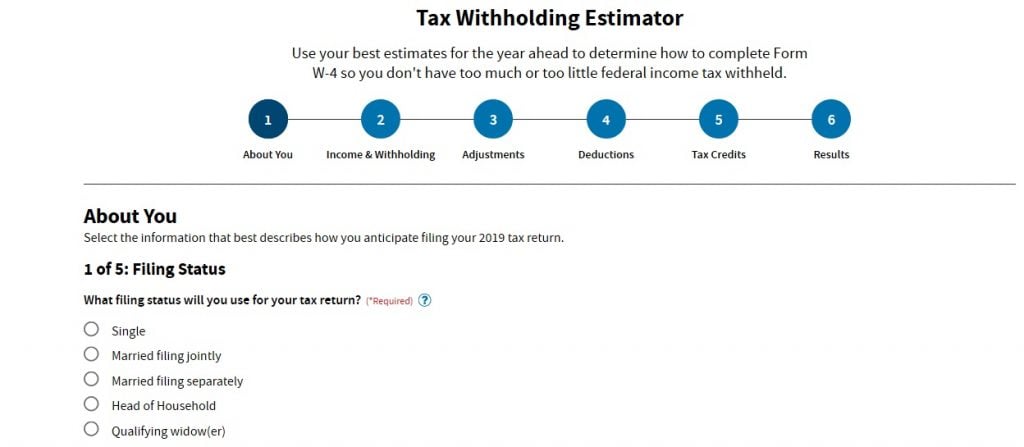
They also offer a downloadable app featuring the estimator plus a search tool for checking refund status.
The initial section requests personal filing information, including dependents, various income sources like pensions, unemployment benefits, and scholarships.
Subsequent questions address employment details and annual tax withholdings. The system also inquires about adjustments, deductions, and eligible tax credits.
Finally, you receive your results.
America offers unlimited earning potential—you can choose your income generation method without restrictions. The key involves identifying optimal wealth-building strategies.
Some individuals focus exclusively on active income opportunities, while others combine active and passive income streams. Some have successfully transitioned to earning substantial wealth through passive income methods alone.
What is Passive income?

Passive income represents earnings that don’t require direct involvement. While initial participation may be necessary, most income generation occurs with minimal effort. Numerous passive income books and courses exist, though many fail to establish realistic expectations.
To clarify, passive income opportunities typically begin with substantial active investment. Generating passive income requires upfront investments of time and money. Following this initial commitment, you earn income without additional work.
Many passive income earners actually invest more time in their income streams than traditional employees. Rather than avoiding work entirely, most passive income earners value the freedom associated with these income sources.
Understanding this distinction is crucial before beginning. Passive income isn’t necessarily “easy money”—it’s simply income earned passively. While certain sources require minimal effort (dividend investing), others demand significant involvement (rental property investment). We’ll explore this concept further.
Benefits of Passive Income
- Minimal overhead expenses
- No payroll tax obligations
- Depreciation deductions available for certain passive income types (favorable tax treatment)
- Continuous earnings, including during sleep
- Most passive income sources scale easily with minimal additional effort
- Superior tax rates through long-term capital gains treatment
Passive Income Examples
Let’s examine today’s most effective passive income opportunities.
Rental Property
Real estate investing remains a popular passive income generation method. Investors purchase rental properties that produce monthly income.
You purchase property and lease it to tenants who pay monthly rent. Each month brings tenant payments, making your rental property an income-producing asset with consistent returns.
Real estate ownership spans both commercial and residential sectors. Commercial property ownership means leasing to businesses—perhaps renting an entire warehouse to a company requiring large space.
Alternatively, divide warehouses into multiple office spaces and lease them to different companies.
As a real estate investor, upfront work establishes passive income for years ahead. Your income becomes scalable—property values appreciate over time, allowing rental fee increases.
Monthly fees represent just one income source. Additional properties multiply monthly income streams.
Rental fees can cover mortgage costs, but true wealth comes from cash purchases. This approach directs every dollar into your pocket, not the bank’s.
Several excellent tax benefits await you:
- No self-employment or FICA taxes on rental income
- Depreciation deductions available
- Tax-free refinancing options
- Tax breaks for “opportunity zone” investments—government-designated revitalization areas
Real estate investment isn’t the only passive income type available. Creating royalty-generating products offers another opportunity.
Royalties
Royalties might conjure images of musicians, bestselling authors, or actors earning from purchases, downloads, and television replays.
You can earn royalties too. The right product can transform this passive income opportunity into substantial paydays. Consider these examples:
- Write and self-publish eBooks on Amazon. Depending on payment structures, you can receive 70% royalties. Amazon Kindle also supports journals, audiobooks, paperbacks, planners, and calendars.



- Selling photographs and digital products on platforms like Etsy, Shutterstock, and personal websites generates long-term revenue from single products.
- Tech-savvy individuals can create software or smartphone apps. Popular programs or apps generate substantial royalties, especially with subscription upsell additions.
Pursuing royalties offers an excellent path from hourly wages to passive income. Transform your active income source into passive earnings. For instance, a CPA relying on hourly wages could create tax-related eBooks, converting ordinary income to passive.
If you possess skills for generating regular income, explore methods to convert those abilities into passive income streams.
Affiliate Marketing
Affiliate marketing represents referral marketing where you earn commissions selling other businesses’ products.
Affiliate marketing requires initial active work to build platforms through websites, blogs, and social media channels. Developing strong followings across all three platforms helps generate substantial passive income.
Through affiliate marketing, you’ll promote other companies’ products. Blogging exemplifies this approach—writing about “Best Laptop Computers of 2020” while becoming an affiliate for featured products, or joining Amazon’s affiliate program to promote Amazon-available items exclusively.
Your blog links each laptop to its Amazon landing page. Reader clicks generate referral fees or commissions from Amazon.


Pretty impressive, right?
How to Maximize Your Earnings
You’re likely ready to begin or continue earning income. Current active income earners might consider switching to passive opportunities, while passive earners may want to try active work for wealth building.
Here’s the optimal strategy: don’t choose one over the other. Instead, pursue both.
Balance both passive and active income generation methods. If you dominate pharmaceutical sales (active), consider writing a “How to Dominate Sales” eBook and self-publishing it on Amazon in all formats (passive).
Alternatively, if you’ve written multiple eBooks, published them on Amazon, and earn excellent royalties (passive), leverage those skills as an online or in-person consultant teaching others the same process. You might even get hired to write books for others as a ghostwriter, commanding high service fees (active).
When selecting passive and active pursuits, follow these guidelines: possess extensive knowledge in the area, maintain genuine passion, charge appropriately without settling for less, and enjoy the process.
There’s no need to wait. Begin pursuing both active and passive income opportunities today.


