
Alternative investments provide unique avenues to diversify your investment portfolio. Art investing has emerged as one alternative that’s captured some investors’ attention. But how do you begin investing in art? Are there specialized platforms for this type of investment? That’s where Masterworks comes in.
The Masterworks platform enables investors to purchase fractional shares in fine art. This platform aims to make art investing accessible and straightforward while identifying actionable opportunities. If you’re considering entering the art market, keep reading our Masterworks review to learn everything about this platform.
What is Masterworks?
Masterworks is an art investing platform that allows investors to access blue-chip artwork through fractional investing. Art collectors are typically wealthy individuals with substantial capital to invest in famous paintings.

The Masterworks platform opens this exclusive art world to almost anyone interested in investing in works of art. Masterworks makes this possible by allowing you to purchase shares of art pieces.
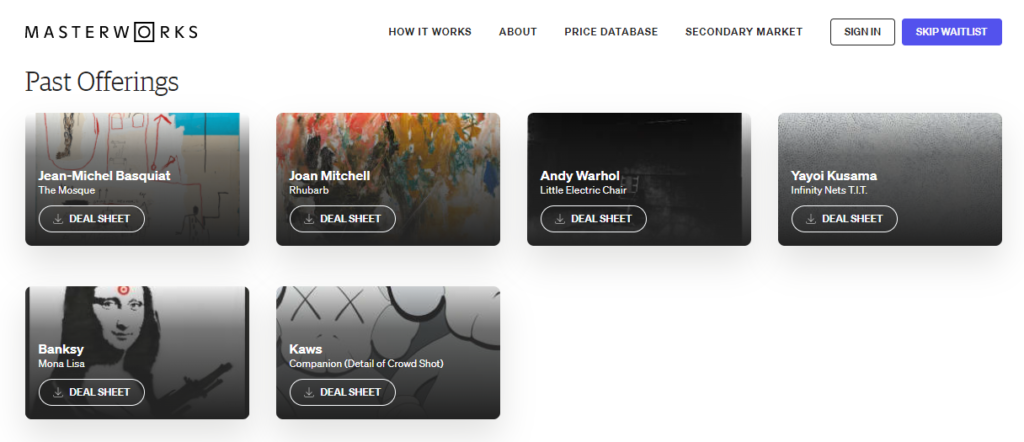
Founded in 2017, the company hasn’t been around long. Based in New York City, this fine art investment platform enables investing in works from artists like Kaws, Basquiat, and Banksy.
Scott Lynn founded this privately held startup. The company’s first acquisition was Andy Warhol’s 1979 Colored Marilyn (Reversal Series). Masterworks purchased the piece for $1.82 million.
Masterworks holds artworks for 3 to 10 years. It has purchased and sold shares on over 40 art pieces since launching.
How does Masterworks work?
Masterworks reviews hundreds of artworks each year to determine which pieces to add to its platform. The Masterworks team has over 75 years of combined experience working as collectors, dealers, or in auction houses.
It also employs an algorithm that analyzes historical data from over 1 million art auctions. It selects artists with proven track records of works appreciating in value.

Masterworks targets annual returns between 9% and 15%. All artwork that Masterworks purchases is registered with the Securities and Exchange Commission (SEC).
Masterworks sells shares of artwork to investors. No single investor can own more than 10% of any piece of fine art.
To invest in artwork, you’ll have 90 days from the SEC approval to purchase fractional shares during the primary offering.
Fractional shares for art investing typically cost around $20. There is no minimum investment amount.
Masterworks investors can visit its New York City gallery to view purchased artwork.
An independent collector or buyer identifies potential purchasers. The majority of shareholders must approve any sale before artwork can be sold.
When artwork sells, proceeds are distributed proportionally to Masterworks investors. Masterworks collects 20% of profits as part of its sales fees.
When investing with Masterworks, artwork is held for three to ten years. Art investing on the platform means it could be years before you see returns.
There’s a secondary market among Masterworks’ offerings. Individual investors wishing to sell their fractional shares can use this marketplace to find buyers.
Keep in mind there’s no guarantee you’ll find a buyer for your shares. Prices on Masterworks’ secondary market depend on demand.
The secondary market is open only to U.S. citizens with U.S.-based bank accounts.
Masterworks Sign up Process
To open a Masterworks account, you don’t need accredited investor status or large sums of money as required by hedge funds.
You must request an invitation to become a member on the platform. Masterworks conducts a phone interview for all potential members.
This is an unconventional (and inconvenient) process requiring a phone interview. Most alternative investment platforms allow complete online sign-up.
Securities and Exchange Commission
The SEC is an independent federal regulatory agency responsible for protecting investors, ensuring fair and orderly securities markets, and facilitating capital formation.
Its main functions include overseeing individuals and organizations in securities markets, including brokerage firms, securities exchanges, dealers, investment funds, and investment advisors.
Each painting Masterworks purchases must be registered with the SEC before being offered to investors on the platform.
Blue Chip Art in the Art Market
You might be familiar with Blue Chip Stocks if you’ve had investing experience. The term “blue chip art” draws inspiration from the stock market.
Blue chip art refers to any artwork expected to appreciate regardless of economic conditions. Paintings from artists like Andy Warhol are considered blue chip art market material.
These pieces are recognized when the art sells. Their resale value and historical auction data should show consistent sales and value increases.
Masterworks at a Glance
Below is a breakdown of key information about investing on Masterworks’ platform:
- Investment type – Fine Art, no self-directed IRAs
- Investor Status – Not limited to accredited investors, open to everyone
- How to invest – Fractional Shares
- Minimum Investment – None
- Typical Holding period – Three to Ten years
- Pricing and Fees – 1.5% annual fee and 20% flat commission on sales
Performance
Masterworks claims to be the largest buyer in the art market. According to its website, its track record (from September 27th, 2019, to March 31st, 2022) is 14.3%, net of fees.
Current offerings include pieces by Banksy, Keith Haring, and Pablo Picasso. Below are some performance results on paintings listed on Masterworks’ website:
- Banksy, Mona Lisa – 32%
- George Condo, Staring into Space – 31.7%
- Albert Oehlen, Doppelbild – 33.8%
Masterworks Features
Minimum Investment
There is no minimum investment requirement with Masterworks. This makes the platform more accessible to investors interested in alternative investments.

Length of Investment
Expect Masterworks to hold artwork for three to ten years. Short-term investors should consider this factor before purchasing fractional shares.
Secondary Marketplace
If you’re ready to sell your shares before Masterworks has sold the painting, you can use its secondary market—provided you’re a U.S. citizen with a U.S.-based bank account.
You can only buy/sell your Masterworks shares to other Masterworks investors. Your potential buyer pool is therefore limited.
Fractional Shares
Purchasing famous paintings typically means buying the entire work, which can cost hundreds of thousands of dollars or more. That’s why art investing has largely been limited to wealthy investors.
Masterworks’ platform allows you to buy fractional shares of art. Fractional shares are portions of an investment, such as a stock.
For example, if there’s a painting Masterworks paid $2 million for, you can purchase a portion for $20 per share.
Educational Resources
Masterworks includes educational content on its platform for users to learn about art investing and available pieces. Its price database allows you to examine all artists, their paintings, and returns.
The Masterworks “Insights” blog features well-researched and engaging articles. Even art investing novices can understand the content. Topics include art investing strategies, benefits of investing in art, and historical artist profiles.
Artist biographies provide better understanding of each creator. Every investable painting has a “Deal Sheet” containing key information investors would want before investing.
Who is Masterworks best for?
To date, Masterworks has over 400,000 registered users. However, not everyone suits its platform. Investors who may benefit from using Masterworks include:

- Have an interest in art
- Wants to diversify your portfolio with alternative investments
- Desires to avoid the risk and costs of buying entire works of art
- Is willing to accept the higher risks of investing in art
- Can hold their investments for several years
Other art investment platforms investors might consider include Yieldstreet, Artspace, and Otis.
What does Masterworks Cost?
Masterworks charges two fees in its structure. The first is a 1.5% annual management fee calculated from your total account value.
This annual fee is charged yearly and reduces the number of shares you own. There’s no option to pay cash for the management fee.
The other fee Masterworks charges applies when artwork sells. Masterworks must hold the fine art for three to ten years for a gain. It charges 20% of profits.
These Masterworks fees help offset costs including artwork management, insurance, appraisals, and SEC regulatory fees.
There are no transaction fees. Buying fine art shares or selling on the secondary market to another investor incurs no fees.
Masterworks Pros and Cons
Pro: Invest without a Minimum Investment Requirement
Investment opportunities on the platform require little money to start. The Masterworks minimum investment is $0. This opens art investing to the masses.
Pro: Art Investment Research tools are Extensive
The research resources Masterworks provides offer substantial information. It maintains a database tracking its artwork, which you can use to find specific artists or view pricing history.
The most recent sale, gross appreciation, and annual investment return are among the financial data you can find on artwork. If you’re new to fine art investing, helpful videos and articles are available to enhance your knowledge.
Pro: Invest in Fine Art with Fractional Shares
Blue chip art pieces don’t require hundreds of dollars or more in share costs. The platform offers fractional shares typically available in $20 increments.
Pro: High Returns Potential
The art market offers potential for higher returns than other investment types, including stocks and bonds. Investment grade art provides an avenue to diversify your portfolio.
Since artwork doesn’t follow stock market fluctuations, it could serve as a good hedge against market downturns.
Pro: Secondary Market allows some Liquidity
If holding art investments for several years isn’t feasible or you need cash access, Masterworks offers a secondary market. This provides some flexibility.

Share demand varies, so there’s no guarantee they will sell.
Pro: Can view Masterworks Artworks
As a platform member, you can visit NYC to view million-dollar artwork. It’s a nice perk unavailable to the general public.
Pro: Platform is User-Friendly
Masterworks’ usability is excellent and well-designed. The website is simple and clean. Information on different art pieces is easy to locate.
Pro: Artwork is securely stored and insured
When you’ve invested in blue chip art, you want that asset protected. Masterworks insures all pieces and keeps them secure for peace of mind.
Pro: Vets the Artists and Artwork before Purchases
Masterworks thoroughly vets artists and artwork before purchase. This provides greater assurance that you’re investing in art more likely to be a solid investment.
Pro: Accessible Platform for all Investors
Investing in fine art from artists like Andy Warhol or Claude Monet isn’t limited to the wealthy with Masterworks. You don’t need a hedge fund when investing with Masterworks.
Any investor can purchase artwork shares without paying the entire upfront cost. Accredited investor status isn’t required for platform access.
Con: No access to Investment Advisors
Masterworks doesn’t offer professional financial advice on this alternative asset class. You’re responsible for building your portfolio.
If you’re well-versed in the art world, this might be a non-issue. You may understand and keep up with current fine art trends.
However, this disadvantages investors unfamiliar with the art market. You’ll need to research independently to determine whether to invest in specific pieces. Masterworks does vet each piece, which helps mitigate risk since they only list art with solid investment potential.
Con: Untested Business Model
The company has only operated since 2017. While returns have been solid so far, there’s no guarantee investments will continue performing. Its business model hasn’t existed long enough to build a substantial track record.
Con: Lacks a Mobile App
While there seems to be an app for almost everything nowadays, Masterworks is only available on a web platform.
Con: Taxes are Higher on Art
Taxed as a collectible, artwork falls under the long-term capital gains tax rate. At 28%, that’s 8% higher than more conventional investment assets—a rate applied to the wealthiest investors.
Con: Must be a U.S. Citizen to access Secondary Market
Only U.S. citizens with U.S. bank accounts can buy and sell shares on the secondary market. International investors miss the opportunity to utilize this major feature.
Con: Must complete a Phone Interview
If you’re interested in joining Masterworks, you’ll need a phone interview with their team. Masterworks uses the interview to know you better, answer questions, and make investment recommendations.
Some potential investors will find this process inconvenient.
Con: Long Lock-Up Periods
When you buy artwork shares, you’ll likely hold them for several years before seeing returns. If liquidity, consistent cash flows, or short-term investing are your primary goals, Masterworks might not suit you.
Con: Investments aren’t Diversified
Masterworks offers only a single asset type. This creates additional risk. Investors should maintain other investment types to diversify their portfolios.
Con: High Risk Factors
Art investing offers high return potential but comes with equally high risk. You’ll only see returns if an investment sells for a higher price years later.
There are no interest payments, dividends, or other ongoing cash flow sources. If you want to sell shares before the artwork sells, you can use the secondary market. However, there’s no guarantee your shares will sell.
FAQ: Masterworks Review
What commissions and fees does Masterworks charge?
Masterworks charges a 1.5% annual management fee and can collect up to 20% of profits when selling artwork. The annual fee and profit cut is high compared to other investment types. However, it appears similar to costs of other illiquid assets.
Is Masterworks easy to use?
The platform is well-designed and easy for anyone to navigate. No mobile app is available, so users must access the website via desktop or laptop.
What features does Masterworks include?
Masterworks has an excellent vetting process and experienced team that reviews all artworks before purchase. Investors can feel confident about investing in artwork found on the platform.
Masterworks files each artwork with the SEC and offers fractional shares to users. There’s a marketplace where investors can sell shares if they wish to cash out before artwork sales.
Does Masterworks offer customer service?
The Masterworks customer service team can be reached by phone at 203-518-5172. The team is available 9 a.m. to 6 p.m. EST. You can also email support@masterworks.io.
Another unique Masterworks feature is that each user gets a dedicated representative. This personal representative provides support and answers your questions.
Bottom Line: Masterworks
Art investing is highly speculative. Even works by masters like Van Gogh can potentially lose value. It’s also not suitable for investors seeking retirement options or short-term investing.
If you’re an investor willing to take risks for potentially high returns, want to diversify with alternative investments, or have a passion for art, Masterworks could be a solid investment choice.


