
From a tiny acorn grows a mighty oak—and that’s exactly what Acorns promises to help you achieve with its intuitive investing app. By connecting your credit, debit, and bank accounts, Acorn automatically rounds up your everyday purchases to the nearest dollar. The spare change gets deposited directly into your Acorns investment account.
Grab a $3.64 coffee at Starbucks? Acorns rounds it to $4.00 and invests the remaining $0.36. This same process applies to every purchase you make.
There’s plenty to appreciate about Acorns, particularly if you’re a younger investor eager to plan for your future but lacking significant disposable income to save.
What makes Acorns beneficial? Is it a smart place to grow your hard-earned money? Discover everything you need to know in this comprehensive Acorns review.

What Is Acorns And How Does It Work?
Acorns represents the digital evolution of collecting spare coins in a jar. Since its 2012 founding, this micro-investing and robo-investing platform has attracted over 4.5 million users and manages $1.2 billion in assets—impressive growth for a company built around spare change.
Pay attention to these key concepts: micro-investing and robo-investing. Micro-investing involves depositing, saving, and investing small amounts into investment accounts, typically eliminating traditional barriers like trading fees and account minimums.
Robo-investing uses automated algorithms and advanced software to manage your portfolio. Think of it as the investing equivalent of having a robot handle your daily tasks.
These two characteristics define the Acorns experience. Rather than handpicking individual stocks like Apple or Microsoft, you select from five portfolio styles that range from conservative to aggressive based on risk and reward preferences.
While Acorns can manage millions of dollars, you can begin with as little as $5.

During initial setup, the app guides you through a survey to assess your investor profile. Based on your responses, Acorns recommends one of their five portfolio options:
- Conservative
- Moderately Conservative
- Moderate
- Moderately Aggressive
- Aggressive

Conservative portfolios emphasize bonds over stocks, while aggressive options do the reverse. Everything between represents variations of these extremes. Though the survey provides a recommendation, you’re free to modify your portfolio selection anytime.
Connect your debit card, credit card, or checking account to Acorns and begin investing your money.
How To Get Started With Acorns
No prior knowledge of stocks, portfolios, or bonds is required to use Acorns. Getting started takes just minutes.
Download the app or register through the Acorns website. You’ll need to provide personal information including your address, birthdate, and Social Security Number. Note that Acorns, like many investment apps, is available exclusively to US residents. At least one linked bank account is required for activation.
Next, Acorns asks about your employment status, net worth, and risk tolerance.

Answer honestly, as this directly influences Acorns’ portfolio recommendation—though you can change styles whenever you prefer.
Upon completion, you’ll reach your account dashboard where you can make your first deposit, activate Roundups, and customize additional settings and preferences.
Acorns Core Features
Acorns emphasizes simplicity and minimal effort. While the platform has expanded to include Acorns Later (retirement accounts) and Acorns Early (children’s accounts), its primary service centers around several key features.
1. Roundups
The cornerstone of Acorns functionality. This feature automatically rounds up each purchase from linked credit and debit cards to invest your spare change. You can connect unlimited debit and credit cards, and Acorns rounds every purchase to the nearest dollar, investing the difference into your account.

2. Recurring Investment
Automatic recurring investments let you specify daily, weekly, or monthly contributions to your account. Customize the frequency as desired, but the minimum monthly investment through recurring payments is $5. This transforms investing into an automatic habit.

3. Found Money
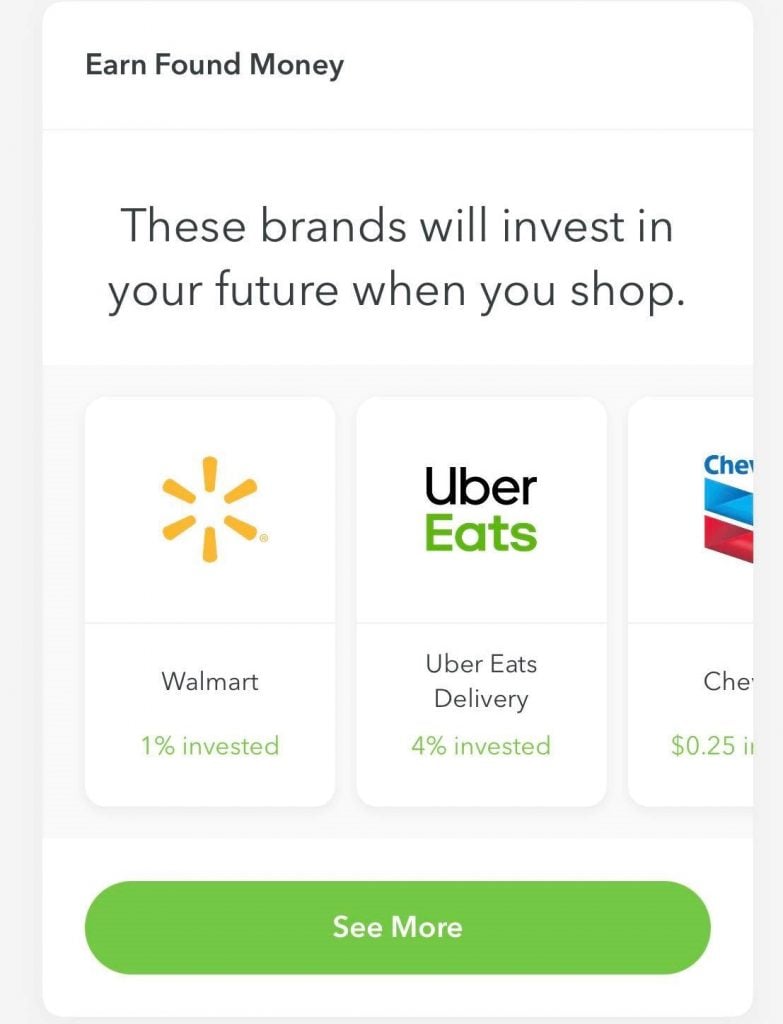
Found Money leverages Acorns’ retail partnerships to boost your investments. The app features rotating offers that invest money into your account when you participate. Partners include major brands like Apple, Chevron, Airbnb, and numerous other companies. They’ll even invest money when you sign up for additional income opportunities like becoming an UberEats driver!
The requirement is making purchases through the Acorns “Shop Now” portal.
4. Acorns Spend
Acorns Spend provides a checking account and debit card linked to your investment account. While spending your investment funds isn’t recommended, the Acorns debit card offers no minimum balance fees, no ATM fees, and no overdraft fees.
5. Acorns Grow
An educational blog focused on smart financial and investment decisions, accessible through the app or online.
6. Acorns Later
Investing for retirement remains crucial for everyone. Acorns Later enables retirement account (IRA) investing through three options:
- Roth IRA
- Traditional IRA
- SEP IRA (for self-employed individuals).
Regarding fees: the basic application costs $1 monthly for your first $1 million, then 0.25% annually thereafter. The plus version includes Acorns and Acorns Later for $2 monthly. The premium version provides Acorns, Acorns Later, and Acorns Spend for $3 monthly.

Continue reading to explore the advantages and disadvantages of the Acorns platform.
Acorns Investment Portfolio Options
As a robo-investor, Acorns removes the need to directly select stocks, bonds, and other financial products for your portfolio.
Instead, choose from five investment styles ranging from conservative to aggressive.
More aggressive selections allocate greater portions to stocks and less to bonds, since stocks typically offer higher risk and reward potential while bonds provide safer long-term stability.
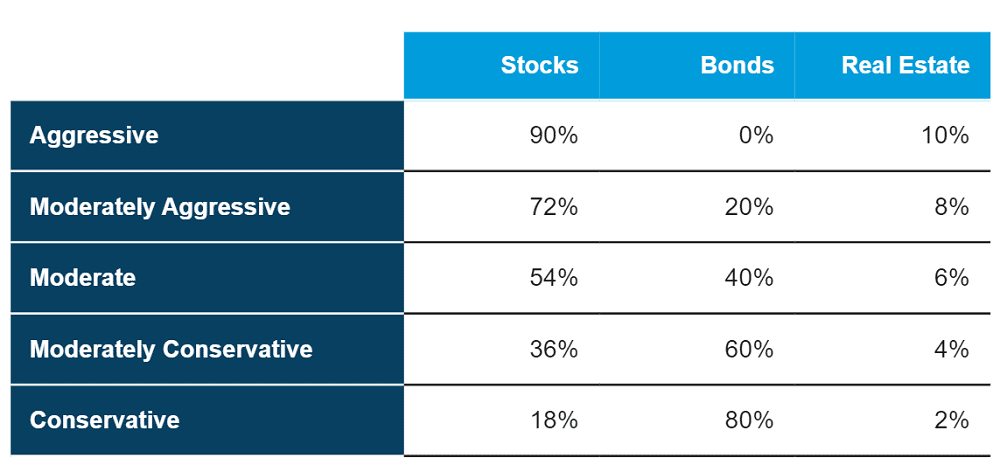
Acorns automatically suggests a portfolio type based on your age, income, and assets, though you’re free to change styles anytime. Portfolio rebalancing occurs within 5 days of any change.
Remember why you chose a robo-investor in the first place. Do you really want to second-guess advanced algorithms? While occasional style adjustments make sense, frequent changes may actually reduce your returns.
Advantages of Using Acorns
Acorns offers numerous benefits, starting with its extremely user-friendly approach to investing. Simply deposit money and let the platform handle the complex work. No stock analysis is required since your funds are automatically allocated to pre-determined portfolios.
The app is also highly affordable. Basic Acorns costs just $1 monthly, while Acorns Later runs $2 monthly, and Acorns Spend is $3 monthly. This represents excellent value considering the service provided. Plus, there are no deposit requirements, account minimums, commission fees, or withdrawal penalties. You can even invite friends and both receive $5 rewards.
Navigation remains straightforward thanks to the clean, user-friendly design.
The platform’s greatest strength lies in enabling investors to start small and consistently build wealth over time. The round-ups feature lets you invest without conscious effort, while automatic recurring investments make the app distinctive. Since consistent contributions are crucial for investment growth, these automated features provide a smooth, passive approach to wealth building.
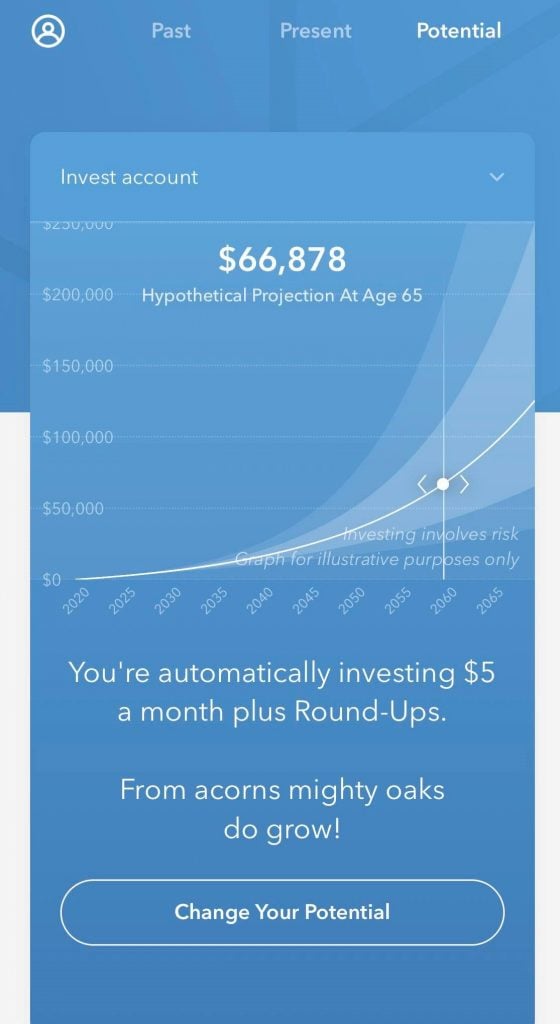
Acorns includes a “potential” section that projects future earnings based on your current portfolio and monthly contributions. This valuable feature helps set realistic expectations for long-term investment performance. Additionally, the retirement options benefit investors seeking comprehensive functionality from a single app.
Disadvantages of Using Acorns
Acorns’ primary limitation is the lack of trading functionality. If you’re interested in active trading, this platform won’t meet your needs. Acorns works best for long-term investors committed to patient, steady growth strategies.
While the $1 fee seems modest, it becomes significant for small investors. If you only invest $12 monthly, that $1 represents an 8.33% monthly fee—substantial compared to platforms charging just 0.25% annually.
Finally, individual security selection isn’t possible. Since the platform automatically allocates your money, you sacrifice control over specific stock investments.
Who Should Use Acorns?
If active trading interests you, look elsewhere. However, Acorns excels for these investor types:
- New investors seeking easy entry into investing
- College students—they can use the platform free during their four college years
- Investors wanting comprehensive functionality from one app and preferring passive long-term investing
Acorns Pricing Structure
Acorns offers three pricing tiers beginning at $1 monthly:
- Lite – $1/month: Acorns Invest (automated investing account)
- Spend – $3/month: Invest, Later, Spend
- Family – $5/month: Invest, Later, Spend, Early
Importantly, Acorns charges no transaction or withdrawal fees. Should you need to access your money, you can withdraw it within days without additional costs.

Acorns Competitors
Numerous apps offer similar micro-investing approaches. The key question is your desired level of involvement in the investment process.
Robinhood and Stash represent two popular Acorns alternatives.
What Is Robinhood?
Robinhood suits people preferring active investment selection. It provides significantly more customization than Acorns while maintaining low fees and commission-free trading.
You can even access cryptocurrency trading. For those seeking a streamlined entry into stock trading, Robinhood merits consideration.

What Is Stash?
Stash also emphasizes user control, allowing direct stock and bond selection. Stash includes debit accounts, fractional shares, suggested investment themes, and roundups. While Stash’s fees slightly exceed Acorns’, frequent promotions make the cost comparison competitive.

Other Alternatives
For long-term micro-investing, Acorns ranks among the best passive platforms. However, some competitors charge no fees whatsoever. SoFi is one such example, also offering individual stock investing. As mentioned, if you won’t invest substantial amounts monthly, Acorns’ $1 fee might outweigh the benefits.
Is Acorns Worth Using?
While Acorns isn’t a traditional side-hustle since you won’t frequently cash out winnings, it excels as a long-term wealth-building and retirement investing tool. Even if you use other platforms for trading or greater investment control, Acorns remains valuable due to its simplicity. It provides an exceptionally passive investment approach once you configure round-ups and recurring contributions. Even active day traders benefit from maintaining a solid long-term strategy.
Final Thoughts: Acorns Review
Among numerous investing applications available, Acorns distinguishes itself through effortless passive investing via automatic recurring payments and round-ups. You can establish a retirement account and access comprehensive features from one platform, including the cashback Found Money program. While it doesn’t serve active day traders or investors seeking granular control, it provides an outstanding foundation for new investors planning long-term success. Ready to begin your investment journey?


