
Getting started with investing can feel overwhelming, but fortunately, numerous excellent online resources provide education and research tools, along with online brokers specifically designed for novice investors.
Which investment websites work best for beginners? This guide examines the top investment platforms that can help new investors launch their portfolios successfully.
Why Investing Matters
Putting your money to work in the stock market—whether through stocks, bonds, or other assets—remains crucial for building long-term wealth. When you invest, your money generates additional returns over time rather than sitting idle.
Nearly every significant financial milestone requires investing. Building a retirement nest egg, for instance, means investing to accumulate funds you’ll need after your working income ends.
Investment goals extend beyond retirement—you might invest to save for a home down payment, your children’s college education, or family vacations. Whether you choose an online brokerage account or work with a traditional bank, these accounts hold your financial securities through a broker or custodian. When selecting a broker, verify they’re a member of the Securities Investor Protection Corporation for added security.

Setting Investment Goals
Your investment objectives significantly influence which investment approach suits you best. Long-term retirement investing might focus on growth-oriented assets that accept moderate risk for substantial returns. Conversely, short-term goals like homeownership may call for lower-risk investments that won’t jeopardize your timeline due to market volatility.
Multiple investment goals can coexist and overlap. Some beginners prefer separate portfolios for each objective, while others build one diversified portfolio that balances all their goals through strategic investment allocation.
Before you begin investing, develop a clear investment strategy, consult with financial experts, or collaborate with personal finance professionals. Research the best beginner-friendly brokers in your area and understand account minimums for stock trading.
Essential Tips for New Investors
Beginning investors face a steep learning curve, with some lessons only coming through experience. However, these four fundamental tips can position you for success from the start:
Maintain Long-Term Focus
Market timing represents one of the biggest pitfalls for new investors. Rather than frequently buying and selling on trading platforms, beginners typically benefit more from a buy-and-hold strategy. This approach demands less active management while often delivering superior returns.
Emphasize Fund Investments
While individual stocks or trendy assets like Bitcoin might seem appealing, most of your portfolio should consist of funds like ETFs (exchange-traded funds). Funds provide broader diversification, protecting you from significant losses if any single company’s value drops.
Keep Costs Low
Investment fees can erode returns through broker commissions and fund management expenses. While eliminating fees entirely may be impossible, minimizing them pays off long-term. Target annual fees under 0.25% for ETFs and mutual funds, and seek cheaper alternatives when you find more expensive options with similar compositions.
Seek Professional Guidance
Don’t hesitate to request help while building your investment knowledge. Tap into the experience of friends and family members, work with financial advisors or online brokers for professional support, or consider automated investment platforms that simplify the process compared to going it alone.
Top Investment Platforms for Beginners
Regardless of your investment approach, you’ll need reliable resources for education, market research, and portfolio construction. While countless websites serve beginner investors, the sheer number can feel overwhelming. We’ve compiled this curated list of the best investment sites to accelerate your investing journey.
Best For Learning: Investopedia And YouTube
For comprehensive investment education covering basics, terminology, and strategies, Investopedia and YouTube provide exceptional starting points.
Investopedia

This comprehensive online resource serves as an investor’s encyclopedia, featuring beginner-friendly articles covering stocks, online brokers, funds, investment accounts, fundamental analysis, portfolio evaluation, and risk management strategies.
Beyond educational content, Investopedia provides detailed broker and financial service reviews, plus a market simulator that lets you test investment strategies without financial risk.
Click Here To Get StartedYouTube

YouTube hosts extensive content for both beginner investors and active traders. Visual learners particularly benefit from the video format, with many investment channels using helpful animations to illustrate market concepts and simplify complex processes. The Investopedia YouTube channel offers an excellent starting point.
Click Here To Get StartedBest for Market Research: Yahoo! Finance

Yahoo! Finance delivers a powerful platform combining educational resources with comprehensive stock and ETF research capabilities. New investors can quickly assess any company through analyst buy/sell ratings and access information about top trading platforms.
For deeper analysis, the platform maintains extensive financial data for fundamental research. Most Yahoo! Finance features remain free, though Premium subscriptions ($34.99 monthly) unlock additional metrics like fair value calculations.
Click Here To Get StartedBest for Stock Recommendations: The Motley Fool Stock Advisor

Building your own stock portfolio becomes much easier with The Motley Fool’s Stock Advisor subscription. This stock picking service boasts an impressive average return exceeding 438%, outperforming many hedge funds while costing just $99 annually (discounted from $199). This resource can enhance your skills as an online stock investor.
Each month, Stock Advisor delivers two thoroughly researched stock recommendations with detailed explanations of each company’s investment potential. The service emphasizes high-growth stocks, particularly in technology sectors, encouraging multi-year holding periods. Consider Motley Fool Stock Advisor for professional-grade stock selections.
Claim Your New Member Discount at The Motley FoolBest for Automated Investing: Acorns

Prefer managed portfolios over building your own? Auto-investing platforms (robo-advisors) like Acorns offer an attractive alternative. Choose from five pre-built portfolios that receive professional management to maintain proper balance over time. All portfolios invest in ETFs with diversified stock and bond exposure.
Acorns excels at helping users accumulate investment funds through features like recurring bank transfers and spare change investing that rounds up purchases and invests the difference. This platform suits investors who prefer autopilot investing.
Click Here To Get StartedBest Brokerage Options: Robinhood or Webull
Individual stock or ETF investing requires a reliable broker. Robinhood and Webull both offer excellent beginner-friendly features: mobile-first platforms, fractional share purchasing of popular companies, and commission-free trading.
Robinhood

Robinhood excels through its community features and discovery algorithms that help identify potential stock investments. While research tools are somewhat limited, the platform’s intuitive trading interface makes buying and selling stocks remarkably simple for beginners.
Get A FREE Stock When You Open A New Robinhood AccountWebull
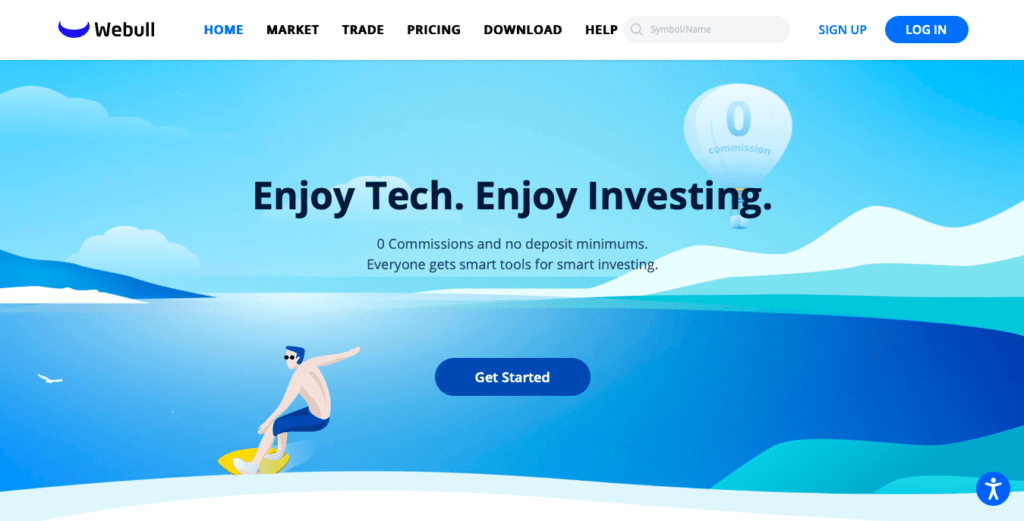
Webull provides more sophisticated research and charting capabilities for investment analysis. The platform also supports individual retirement accounts—a significant advantage for retirement-focused investors.
Click Here To Get StartedFinal Thoughts on Beginner Investment Platforms
While investing might appear complex initially, these carefully selected websites provide new investors with essential information and tools needed to build portfolios and activate their money’s earning potential.


